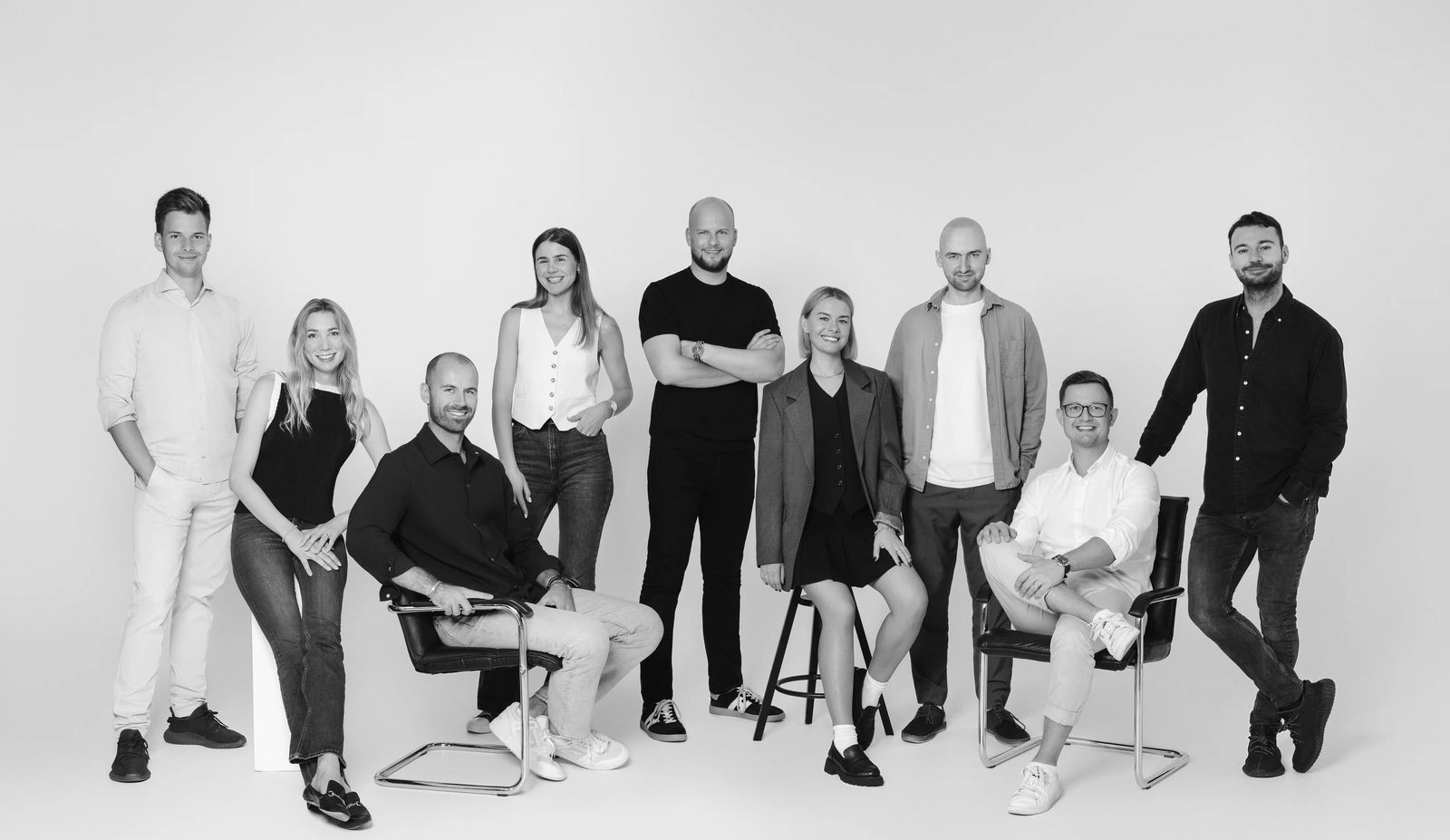
Almost everyone asks what a photoshoot costs. Nobody asks what not having one costs. Yet that's the number that decides whether the session pays off. A photoshoot has a price you see on the invoice. Its absence has a price that spreads across the whole company and therefore never shows up anywhere: lost conversations, more expensive recruiting, hours spent hunting for "that better photo".
Lost sales
The B2B buying process starts earlier than it seems. Before replying to an email or taking the first call, a buyer opens the profile and decides in a few seconds whether they're talking to a serious person.
Roughly 42% of B2B buyers do this deliberately. The rest do it unconsciously – with the same result. Run your own numbers. If your team has ten salespeople and each loses one conversation a month to a weak first impression, that's 120 conversations a year that never happened. Multiply by your average deal size, and the cost of a photoshoot becomes a rounding error.
More expensive talent acquisition
A careers page with inconsistent portraits sends a signal nobody says out loud: things are messy here. Some employees photographed professionally, others cropped from group shots, others with no photo at all.
Good candidates choose between several offers, and visual disorder is one of those things that tips the scales without any rational argument.
Stock photos are a separate problem. A candidate recognises them in a second, and the message they send is precisely the opposite of the intended one.
A weaker brand in the press
A journalist takes the first photo they find. If there's no better one, the article runs with whatever exists. And it stays there. A photo published online lives five or ten years, sometimes longer, because other outlets pick it up. One hour in a studio versus ten years of the wrong photo – that comparison usually ends the discussion.
Wasted team time
These costs never make it into any budget line, but they appear every time a photo is needed. Before a conference, an article, a presentation or a newsletter, someone hunts for "that better photo". Asks colleagues. Digs through archives. Finally crops whatever exists. If such an episode takes an hour and repeats twice a month, that's 24 hours a year. Three working days. For one person.
Why 0.1 seconds is the most important number
Princeton University research shows a first impression forms in a tenth of a second. In that time the brain decides on trustworthiness and competence. Looking longer essentially doesn't change the decision – it only strengthens it. Which means a photo is not decoration next to text. It's the first argument you make, and the only one working before anyone reads your first sentence.
What a professional photo delivers
According to LinkedIn data, profiles with a professional photo get up to 14× more views and 36× more professional messages. Those numbers look big – and they are. But the logic behind them is simple: the platform's algorithm shows complete profiles more often, and people are more willing to write to someone whose face they can see.
How to measure the benefit?
There is no perfect metric, but a few things can be tracked:
- LinkedIn profile views before and after the update – visible for free.
- Reply rates to cold emails over the same period.
- Candidate quality and volume after a careers page refresh.
- How many times a quarter marketing hunts for a photo, and how long it takes.
No single indicator is precise on its own. Together they give a clear enough picture.
Every team member is a channel
A company page on social networks reaches its followers. Employees' profiles reach their personal networks, which combined are often several times larger. That means every team member is an additional visibility channel for the company – but only when their profile looks like something worth looking at.
Frequently asked questions
Does a professional photo really increase profile views?
According to LinkedIn data, profiles with a professional photo receive up to 14× more views and 36× more professional messages than profiles without one or with a poor photo.
How long does a photo live once it appears in an article?
In practice, five to ten years, sometimes longer. Published photos get picked up by other outlets and aggregators, so removing one from everywhere is nearly impossible.
Is it worth investing in portraits for a small company?
In a small company each person's visibility weighs more, because sales happen through personal contacts more often. For a five-person team, professional portraits often deliver a bigger relative impact than for a team of fifty.
How do I measure the benefit of a photo?
Track LinkedIn profile views before and after the update, reply rates to emails, and how much time the team spends hunting for a usable photo. No single metric is precise; together they show the direction.
Do stock photos damage a company's image?
They do when they portray supposed employees. Candidates and clients recognise stock photos quickly, and the signal they send is the opposite of trustworthy.
Sources: LinkedIn Official Data; HubSpot; Princeton University first-impression research.